roller coaster of a year where many things were canceled, we have Christmas to celebrate some of the most important things in life – family, supportive friends and humility of the soul.
To all our new and old readers we would like to thank for being with us and thank you for staying along the road during these unusual times.
Merry Christmas! The next year is one of promises for a brighter and healthier future where we’ll know better and won’t repeat our mistakes. Our pledge for 2021 is to keep improving, stay dedicated, and always work tirelessly in providing you the latest in everything mobile.
May good health and bright spirits carry you forward into the next year. We’re looking forward to spending it together!
The widely popular Snapdragon 675 which was announced back in 2018 has a successor. Today Qualcomm announced its Snapdragon 678 which aims to bring better photography and connectivity capabilities in the midrange market without sacrificing battery endurance.
The SD 678 is built on the 11nm LLP process and is quite similar to its predecessor with the only change being the overclocked Cortex A76 cores working at up to 2.2GHz compared to 2.0Ghz on the SD 675. You get the same Adreno 612 GPU though Qualcomm promises increased performance.
The rest of the specs match those of the SD 675 including Qualcomm’s Spectra 250L ISP, Snapdragon X12 LTE Modem and Hexagon 685 DSP. The SD 678 supports phones with up to 2520×1080 pixel resolution displays and 10-bit color as well as up to 48MP main and 16MP selfie camera sensors with 4K video recording at 30fps on the HEVC codec.
The controversial push to force Chinese tech unicorn ByteDance to divest part or all of its smash-hit TikTok social media service to a U.S.-based company could be in doubt after a report today indicated that China’s government may oppose the transaction. According to reporting by Reuters, the Chinese government may prefer TikTok to simply shutter its U.S. operations instead of allowing it to be sold to an American company.
The potential divestment of TikTok is not a regular business transaction. Instead, the deal is being demanded by the U.S. government, as President Donald Trump directs foreign and economic policymaking via executive fiat. Leaning on his own fabled business acumen, the American premier has also demanded that his government receive a portion of any final sale price. It is not clear if that concept is legal.
As the U.S. and China spar around the globe for both economic and political supremacy, the deal is a flashpoint between the countries with a muddle of companies stuck in the middle. ByteDance is in the mix, along with Microsoft, Walmart and other companies to a lesser degree, like Oracle. The Trump administration has set a mid-September timeline for a deal being struck, though as the month burns away it is not clear if that timeline could be met.
The United States is not alone in taking steps to curb Chinese influence inside its borders, as the TikTok sale comes after India banned the app, along with dozens of other China-based applications.
The deal is also under pressure from a changing regulatory environment in China, with the country’s autocratic leadershipchanging its export rules to possibly include elements of TikTok that could limit a transaction, and perhaps scuttle its sale.
For ByteDance, the situation is a nightmare. For lead-suitor Microsoft, the transaction is a shotgun marriage that it might not be entirely enthused about. For the Trump administration, it’s an attempt at a power play. And for China’s increasingly authoritarian government, the deal could feel like submission. So, if the deal does manage to come together it will be more surprise than eventuality.
President Donald Trump signed an executive order on Thursday banning transactions with ByteDance, the parent company of popular app TikTok . The White House also announced that he signed a similar order banning transactions with WeChat, the messaging app owned by Tencent that is ubiquitous in China, but has a much smaller presence than TikTok in the United States, where it is used mainly by members of the Chinese diaspora.
Both orders will take effect in 45 days, but (and this is a key point) the executive orders are vague and confusing because they say Secretary of Commerce Wilbur Ross will not identify what transactions are covered until then. It’s also still uncertain how the executive orders will affect the apps’ operations in the U.S. or Tencent’s other holdings.
Though the order was not phrased to ban the two apps directly, the government may have other means to restrict them. Just yesterday, the Trump administration announced its plans to purge “untrusted” Chinese tech services, which could reasonably include WeChat and TikTok, under the Clean Network program.
A Tencent spokesperson said the company is reviewing the executive order to get a full understanding.
TikTok hit back saying that the executive order was “issued without any due process” and would risk “undermining global businesses’ trust in the United States’ commitment to the rule of law.”
The orders cite the International Emergency Economic Powers Act and the National Emergencies Act. It is important to note that naming the apps’ operations in the United States as a national emergency is a highly unprecedented act and the legality of the orders will likely be challenged. ByteDance is currently pushing back against the Indian government’s July decision to ban TikTok along with 59 other apps; like the U.S., India also cited national security concerns around user data collection.
Microsoft announced over the weekend that it is in negotiations to buy TikTok from ByteDance, naming September 15 as a deadline for negotiations. The order would take effect shortly after the deadline set by Microsoft for the deal. ByteDance reportedly agreed to give up its entire ownership in the app even though it had previously wanted to maintain a minority stake.
China’s ByteDance has agreed to divest its TikTok operations in the US, according to a report in Reuters. Under the deal, Microsoft would take over stewardship of the data of U.S.-based users. The deal allows another company besides Microsoft to operate TikTok in the United States. This would allow the service to continue to operate in the United States, sidestepping the alleged executive order threatened by President Trump.
Allegedly, ByteDance had previously sought a deal that would allow the company to retain a minority stake in the company. That plan was apparently recently abandoned after the White House rejected the proposal.
Under this new deal, Microsoft would be in charge of protecting U.S.-based users’ data, and another U.S.-based company would be allowed to operate TikTok.
It’s unclear if this deal would be enough to allow TikTok to continue to operate within the United States.
Microsoft and the White House did not respond to a request for comment.
This news comes hours after President Trump told reporters that he was going to sign an executive order banning the Chinese-owned app from operating within the United States. In response, ByteDance issued the following statement, which we initially reported here.
“100 million Americans come to TikTok for entertainment and connection, especially during the pandemic. We’ve hired nearly 1,000 people to our US team this year alone, and are proud to be hiring another 10,000 employees into great paying jobs across the US. Our $1 billion creator fund supports US creators who are building livelihoods from our platform. TikTok US user data is stored in the US, with strict controls on employee access. TikTok’s biggest investors come from the US. We are committed to protecting our users’ privacy and safety as we continue working to bring joy to families and meaningful careers to those who create on our platform,” said a TikTok spokesperson.
Many iPhone and iPad models let you unlock your device with your face using Face ID, but on a Mac, you still need to type in your password, set up your Apple Watch to auto unlock your Mac, or, depending on what model of Mac you have, use your fingerprint with Touch ID.
The code in the beta apparently references Apple’s codename for the TrueDepth camera. The TrueDepth camera is what enabled Face ID in Face ID-capable devices like the iPhone 11 and the iPad Pro, but no Macs currently available have one. The code reportedly also has snippets mentioning the terms “FaceDetect” and “BioCapture,” which seems to point to biometric facial recognition of some kind.
If the facial recognition technology does make its way to Macs, it seems possible it could be used for unlocking your device and with augmented reality apps that map your face. (Perhaps the new Zoom trend will become fun Zoom masks instead of Zoom backgrounds.) And Face ID on the Mac could come in handy if you’re using the next version of Safari, which is set to ship with iOS 14 and macOS Big Sur, as the new version will let you log in to websites without a password just by using Touch ID or Face ID, as long as websites support the feature.null
However, it’s unclear which Macs might be getting Face ID, or when they might get it, if they do at all, so we’ll just have to wait and see if Apple eventually brings the technology to its computers.
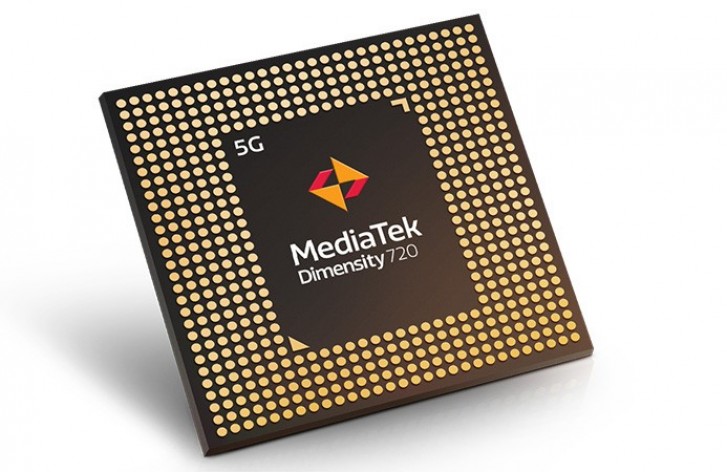
MediaTek has announced another 5G-enabled chipset, just after the Qualcomm’ Snapdragon, the MediaTek Dimensity 720, and this one goes even lower in the price bracket. It’s also the first from the company in the Dimensity 700-series.
It’s built on the 7nm manufacturing process and employs an octa-core CPU that consists of 2x Cortex-A76 cores and 6x Cortex-A55 cores coupled with a Mali-G57 MC3 GPU. The chipset can be paired with LPDRR4X RAM and UFS 2.1 storage.
As far as 5G capabilities go, the mid-tier chip supports the sub-6GHz standard. To address the relatively higher power consumption of 5G, MediaTek is counting on the so-called 5G UltraSave technology to save on some juice.
Other notable features include 90Hz, HDR10+ display support, Bluetooth 5.1, advanced APU for machine learning, 64MP cameras or 20MP+16MP dual camеra configurations. Of course, 4K recording is also possible.
MediaTek says that the first Dimensity 720-powered smartphones will arrive in the following months and given the pricing of the Dimensity 820 phones right now of around $250, we suspect the 720 will bring the price even lower.
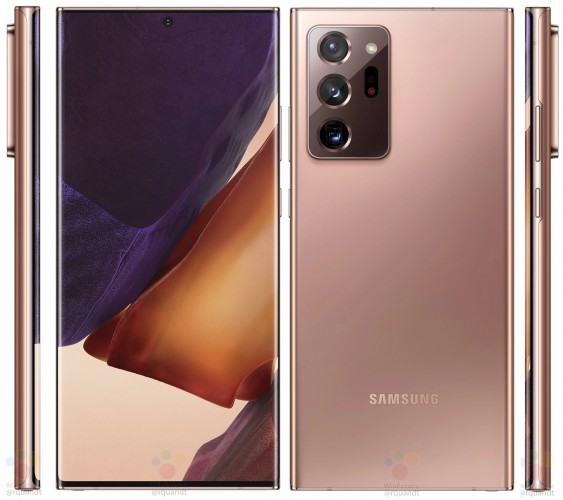
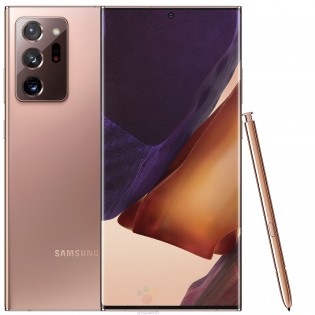
The Samsung Galaxy Note20 Ultra expected to arrive on August 5 has leaked several times before, but today the flagship has leaked with its full specs and images, giving us a very detailed pictures.
White colour variant
According to German blog WinFuture, the Galaxy Note20 Ultra will pack a 6.9″ WQHD+ 19.3:9 120Hz Dynamic AMOLED Infinity-O display with a punch hole in the center for the 10MP selfie camera with dual-pixel autofocus and a fingerprint reader underneath for biometric authentication. The Note20 Ultra will be the first smartphone to feature Gorilla Glass 7.
Around the back, the Galaxy Note20 Ultra will pack a triple camera setup comprising a 108MP main, 12MP ultrawide, and 12MP telephoto units. The primary camera will record 8K videos and come with omnidirectional and laser autofocus, whereas the telephoto module will feature a periscope-style lens offering 5x optical zoom and 50x Space Zoom since Samsung decided to drop 100x Space Zoom that featured on the Galaxy S20 Ultra.
Under the hood, the Galaxy Note20 Ultra will have an Exynos 990 SoC in Europe which will be paired with 12GB RAM. The smartphone will have 256GB and 512GB UFS 3.1 storage options, and it will come with a microSD card slot as well for storage expansion.
On the software front, the Galaxy Note20 Ultra will boot Android 10 with One UI 2.x. It will also get automatic OneNote synchronization and optimized cloud gaming via Project xCloud thanks to Samsung’s partnership with Microsoft. Additionally, Note20 Ultra users will have access to 90 gaming titles via Xbox Game Pass, making it a “portable gaming console”.
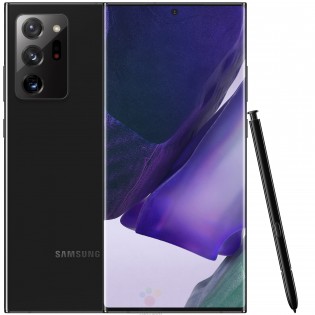
Samsung Galaxy Note20 Ultra with S Pen in Mystic Bronze and Mystic Black colors
Fueling the entire package will be a 4,500 mAh battery that will go from flat to 50% in 30 minutes with the bundled charger. Other highlights of the Samsung Galaxy Note20 Ultra include S Pen stylus with 9ms latency, 5G support, USB-C 3.2, Bluetooth 5.x, NFC, Wi-Fi 6, dual-frequency GPS, Samsung DeX, IP68 rating, wireless charging, and AKG-tuned stereo speaker.
The Note20 Ultra will also come with a dual SIM card slot and support eSIM functionality. It will be offered in at least two colors – Mystic Bronze and Mystic Black – and will be priced higher than €1,000.
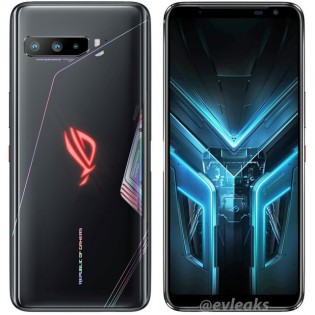
We’ve already seen leaked images and video of the Asus ROG Phone 3 arriving on July 22, but a new picture shared by reliable leakster Evan Blass gives us our clearest look yet at the upcoming gaming smartphone.The image shared by Blass corroborates previous leaks and you can see that ROG Phone 3 packs a notchless display like its predecessor – ROG Phone 2. The button placements also remain the same, but the stereo speaker no longer has the color accent.The back of the ROG Phone 3 houses a glowing ROG logo like the ROG Phone 2 with “Republic of Gamers” text right below it, but the graphics have changed now and so is the number of cameras – the ROG Phone 3 features a triple camera setup on the back, which according to TENAA includes one 64MP and one 13MP unit.Asus ROG Phone 2 Asus ROG Phone 3Asus ROG Phone 2 • Asus ROG Phone 3The ROG Phone 3 is confirmed to have the Snapdragon 865+ SoC and the specs revealed by different certifying authorities include a 6.59″ FullHD+ AMOLED display with a fingerprint reader underneath, Android 10, up to 12GB RAM and up to 512GB storage, and dual-mode 5G.
Asus ROG Phone 2
This time Asus ROG Phone 3 will also accompanies with 6000 mAh battery which powers up by USB Type -C port.
A research conducted by an investment bank has given us a roadmap of upcoming Qualcomm and MediaTek chipsets along with some interesting details.
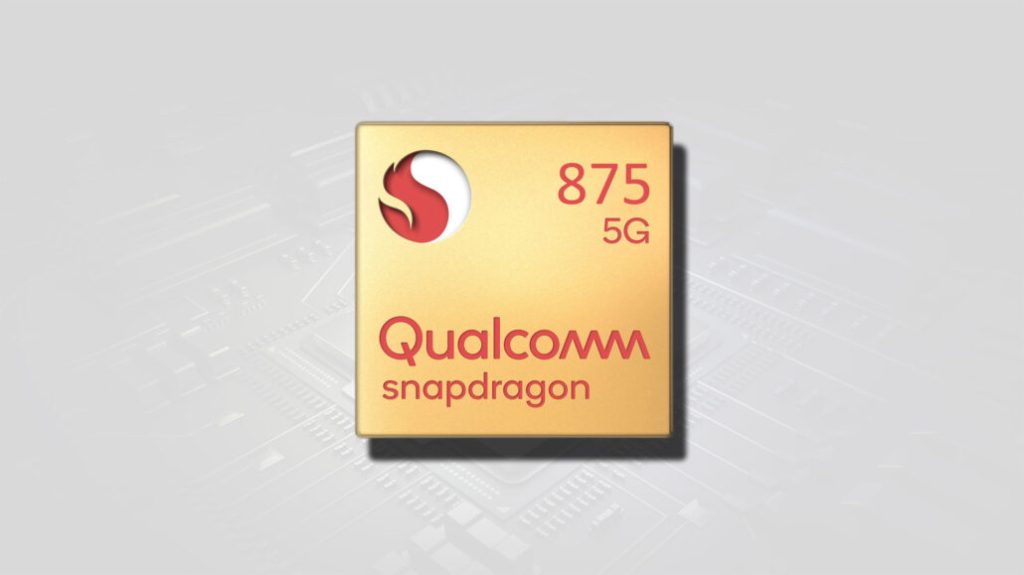
According to the finding shared by a Weibo user Qualcomm is looking to release the Snapdragon 865’s successor – the Snapdragon 875G sometime in Q1 next year. It will be based on Samsung’s 5nm EUV process, although initial rumors said that TSMC will once again be manufacturing the silicon.
Qualcomm is expected to quickly follow that up with the launch of the mid-range Snapdragon 735G chipset based on the same 5nm EUV process. An entry level Snapdragon 435G chipset will debut at about the same time.
The roadmap the researches compiled
MediaTek also has some good things in the pipeline. In Q3 this year we should be seeing the Dimensity 600 based on a 7nm process, but we knew that already. More interestingly the Dimensity 400 is expected around the turn of the year. It’s listed as a 6nm chipset, but we guess that means it will combine 7nm and 5nm elements.
Finally there’s a 5G-enabled 5nm flagship SoC coming by MediaTek in Q2 2021.
Oppo has been spearheading the fast-charging market in the past few years and today the company introduced the mightiest charger for smartphones ever at 125W. At a launch event in China, we saw three new ultra-fast charging solutions – the 65W AirVOOC wireless charge, a pocket-sized 50W mini SuperVOOC charger, and 110W mini flash charger.Oppo officially announces 125 flash charge, 65W AirVOOC wireless flash chargeThe 125W flash charge technology is said to charge a 4,000 mAh battery up to 41% in five minutes, while it will need a total of 20 minutes to reach 100%. In order to protect the power cell and the smartphone, the design of the tech comes with three parallel charge pumps that split the power, and Oppo has implemented 10 additional temperature sensors for extra safety.
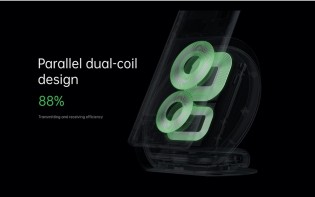
Oppo officially announces 125 flash charge, 65W AirVOOC wireless flash chargeThe AirVOOC wireless flash charge adopts a circular design for better cooling, a glass panel for heat dissipation, and “self-developed isolated charge pump technology” with parallel dual-coil design to increase wireless charging efficiency.
It operates on the same level as the wired 65W SuperVOOC 2.0 – two coils are charged simultaneously and a full charge of a 4,000 mAh battery should take about 30 minutes.Currently, the charger is in its conceptual stage, since there are no Oppo smartphones that support the standard. The bottom of the charger comes with a cooling fan that lowers the temperature by two degrees Celsius, and the overall design is made in such a way to always provide a flow of fresh air.
65W AirVOOC wireless charging65W AirVOOC wireless chargingThe 50W mini SuperVOOC charger is no bigger than a portable 4G modem. The idea is to put it in a pocket or a purse and get on with your day, instead of having to bring around the standard heavy power brick. It is compatible with VOOC protocols (up to 4.0 at 30W) and also works with 27W and 50W PPS.
In order to provide proper current, the mini charger comes with so-called “pulse charging” – Oppo removed an electrolytic capacitor and allowed the charger to literally pump massive amounts of power at equal time slots of 40 ms, instead of going for the traditional increase of power throughout time.
50W mini SuperVOOC charger 50W mini SuperVOOC charger 50W mini SuperVOOC charger 50W mini SuperVOOC charger50W mini SuperVOOC chargerThe 110W mini flash charger has the same idea – it is slightly bigger, but operates on the same level. It will be compatible with all popular standards – SuperVOOC up to 65W, VOOC up to 30W, constant output of PD at 65W and Quick Charge at 36W.Oppo even said it could charge competitor devices, although at limited rates – the Huawei P40 Pro at 18W, instead of 40W, the Xiaomi Mi 10 Pro at 30W, instead of 65W, and a MacBook Pro at 65W – in all cases charging be carried out with the original cable, provided in the retail box.Oppo officially announces 125 flash charge, 65W AirVOOC wireless flash charge.
Currently, there are over 157 million users all over the world of the various VOOC technologies, and Oppo is promising to keep delivering fast-charging solutions with applying for more than 2,800 global patents on flash charging.
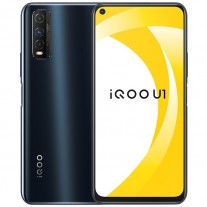
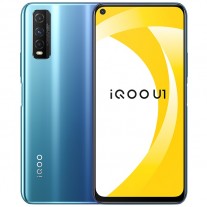
Last week iQOO unveiled the iQOO Z1x with a Snapdragon 765G SoC and 120Hz display and today the company added a new member to its lineup, dubbed iQOO U1.The iQOO U1 is built around a 6.53″ LCD of 2340×1080-pixel resolution that has a punch hole in the upper-left corner for the 8MP selfie camera. Around the back, we have a triple camera setup aligned vertically in the top-left corner. It comprises a 48MP main, 2MP macro and 2MP depth sensor units.iQOO U1 goes official: Snapdragon 720G SoC, 48MP triple camera, and 4,500 mAh batteryUnder the hood, the iQOO U1 has a Snapdragon 720G SoC paired with 6GB or 8GB RAM. The smartphone runs Android 10-based iQOO UI and has two storage options – 64GB and 128GB – but neither come with a microSD card slot for storage expansion.Fueling the entire package is a 4,500 mAh battery that charges through a microUSB port at up to 18W. Other highlights of the iQOO U1 include a side-mounted fingerprint reader, 3.5mm headphone jack, Game Space, Multi-Turbo, and Bluetooth 5.1.
black colour variant
The iQOO U1 is offered in three colors – Black, Blue, and White. The base model of the iQOO U1 with 6GB RAM and 64GB storage is priced at CNY1,198 ($170/€150) and for CNY200 ($30/€25) more you get double storage. The top-end variant, with 8GB RAM and 128GB storage, will set you back by CNY1,598 ($230/€200).iQOO U1 in Black color iQOO U1 in Blue color iQOO U1 in White coloriQOO U1 in Black, Blue, and White colors.
blue colour variant
The U1 is currently up for pre-orders in China through the company’s official site, with sales commencing from July 23.
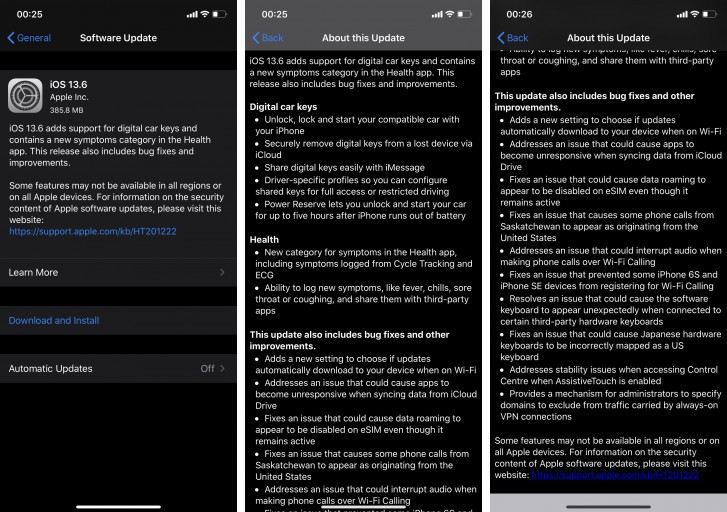
Apple has released version 13.6 update for compatible iOS and iPadOS devices. This update focuses on the new digital car keys feature and improvements to the Health app
.some screenshots captured during download
With mind-blowing 13.6, your iPhone can now act as keys for compatible cars. This feature was demoed during the WWDC 2020 keynote but in case you missed that, it allows you to place your phone next to your car door to lock or unlock it using NFC. The phone can then also be used to start the car.
The digital key is securely stored on the device but can be remotely deleted via iCloud in case the device is lost. You can also share a digital key via iMessage, allowing someone else to operate your car. Driver profiles can be customized so the shared keys can have restricted driving access or full access.
Next are some changes to the Health app. The app now features new category of symptoms, including symptoms logged from Cycle Tracking and ECG. You can now also log new symptoms, such as fever, chills, sore throat or coughing, and share them with third-party apps such as those used by governments for contact tracing.
Finally, you can now choose to not just have your iPhone automatically download the latest iOS update but also automatically install it overnight while the phone is charging. This means the update process can be completely seamless and your phone would be on a new build automatically when you wake up.
Apple has also previously released iOS 12.4.8 for older iPhones that don’t support iOS 13. By the way this all only include the security patch updates.
Apple also released watchOS 6.2.8, tvOS 13.4.8, HomePod OS 13.4.8, and macOS Catalina 10.15.6. All updates are now available to download only and only on compatible devices.
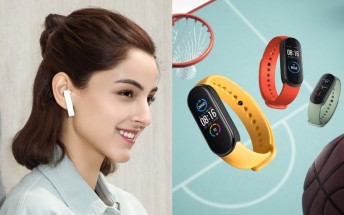
Xiaomi is one of the leaders in the wearable industry and it built that reputation on capable but affordable gadgets like the Mi Bands and Bluetooth headsets. Today, the company announced the global launch of the latest products in both categories.
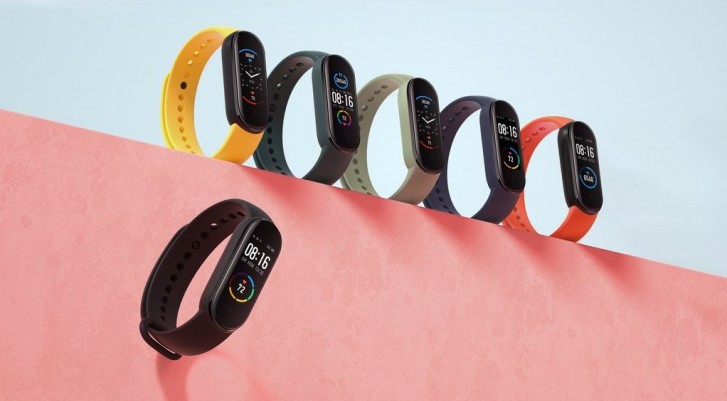
Xiaomi Mi Smart Band 5
Xiaomi added “smart” to the name of the band, but it still did not add NFC to the global version. That remains exclusive to China (though there is a Mi Band 4 NFC for Europe).
The Mi Smart Band 5 supports 11 different exercise modes
The new model boasts two major changes, starting with the larger display – 1.1”, up from 0.95”. The new version supports widgets, allowing you to customize the indicators on the home screen Speaking of indicators, the heart rate monitor is 50% more accurate than on the previous version (but it lacks an SpO2 sensor).
The other big upgrade is that the charging cable can be attached without removing the gadget from its wrist bands. This is great for everyone who likes to use metal bands (which usually require screws).
The band will launch with 6 official silicone wrist bands and will be pre-loaded with 65 themes for the home screen. Some of them feature animated characters if a static display seems too boring.
As before, battery life is rated at 14 days. The band is water resistant to ATM5, so you can take it for a swim in the pool (there are a total of 11 exercise modes, including jump rope and yoga). When you’re done, you can use the band’s camera remote shutter key feature to snap a selfie from a distance.
The sleep tracking has been upgraded to detect REM sleep and can track your naps too. Additionally, it can detect your stress levels and guide you through a breathing exercise. Female health tracking is a major new feature too.
The Xiaomi Mi Smart Band 5 starts at €40, but the first buyers will pay the early bird price instead – €35.
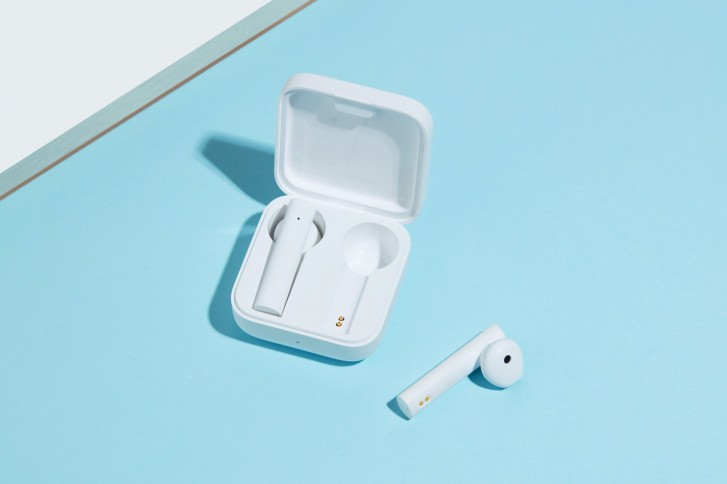
Mi TWS Earphones Basic
The Mi TWS Earphones Basic feature 14.2 mm dynamic diaphragms and support the AAC audio codec for high-quality wireless audio. They also feature noise cancellation for calls using an extra pair of mics.
The buds feature touch controls, that is pretty standard. Smart ear detection is definitely a perk, though, especially if you were expecting “basic” features. This automatically pauses your music player when you take one of the buds out and resumes when you put it back in. Also, if you have a Xiaomi phone, pairing it the buds is as simple as opening their box.
The battery life on the buds is 5 hours on a charge, then you can pop them into their carrying case to top them up. Combined, the total battery life is up to 20 h. The case is charged over USB-C, so you can use your phone’s charger.
Xiaomi Mi TWS Earphones Basic
The MI TWS Earphone will cost €40 normally, but the first buyers are getting a special price – just €30.
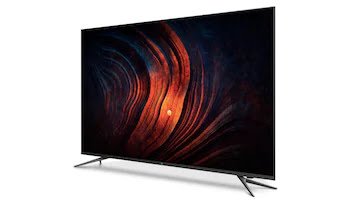
OnePlus has launched two new television series in India
The Y series is available in 32-inch and 43-inch sizes
All three new OnePlus TV devices run on Android TV 9 Pie
OnePlus has launched its latest smart televisions in India as a part of the new U series and Y series. The new OnePlus Y-series TV models are priced starting at Rs. 12,999, whereas the single U-series TV will retail at Rs. 49,999. The OnePlus televisions run on Android TV 9 Pie, and offer different features, sizes, and resolutions, depending on the variant. The OnePlus TV Y series is available in two sizes – 32-inch with HD resolution (1,366×768 pixels) and 43-inch with full-HD resolution (1,920×1,080 pixels) – while the OnePlus TV U series is available in a single variant with a 55-inch Ultra-HD (3840×2160-pixel) screen.The OnePlus TV U Series and Y Series televisions go on sale starting July 5 on Amazon. The televisions will also soon be available on the OnePlus online store, as well as through offline retail.OnePlus TV 2020 specifications, featuresStarting off with the more affordable OnePlus TV Y series, the televisions are available in 32-inch and 43-inch sizes, with prices and features that will appeal to budget buyers. These smart TVs include access to features such as Oxygen Play, OnePlus Connect, and more, promising users an enhanced smart TV experience at competitive prices.Dolby Vision: What Is It, and How Does It Make Your Movies and TV Shows Better?The more expensive OnePlus TV U series is available in a single size variant of 55 inches, with a 4K LED screen and support for up to the Dolby Vision HDR format. The television is similar to the OnePlus TV Q1 and OnePlus TV Q1 Pro (Review) in terms of most specifications, with the obvious difference of having an LED display where the Q1 series has QLED displays.The TV is also has 93 percent colour gamut on DCI-P3, which is the standard used in most cinema halls around the world.The OnePlus TV 55U1 has a thickness of 6.9mm near the edges, a screen-to-body ratio of 95 percent, and access to Oxygen Play and the OnePlus Connect app for easier connectivity with a smartphone. The remote gives access to Netflix and Amazon Prime Video through short keys, and can also be used to communicate with Google Assistant.All three TVs in the two ranges run on Android TV 9 Pie with access to Google Assistant, Google Chromecast, and the Google Play store to download apps and games. Users can also use the Oxygen Play interface for a content-centric view. The Y series has a rated sound output of 20W with Dolby Audio tuning, while the U series has a 30W four-speaker setup, support for Dolby Atmos audio, and the ability to use the television as a wireless speaker in Bluetooth stereo mode.OnePlus TV Long Term ImpressionsOnePlus TV 2020 pricing vs competitionThe OnePlus TV Y series is positioned as the more affordable offering, priced at Rs. 12,999 for the 32-inch variant, and at Rs. 22,999 for the 43-inch variant. With its pricing and features, the televisions will take on recent launches such as the Realme Smart TV and Vu Cinema TV range, which are also available in 32-inch and 43-inch variants. OnePlus hopes that its design, performance, record with software updates, and promise of performance will win over buyers in this segment.
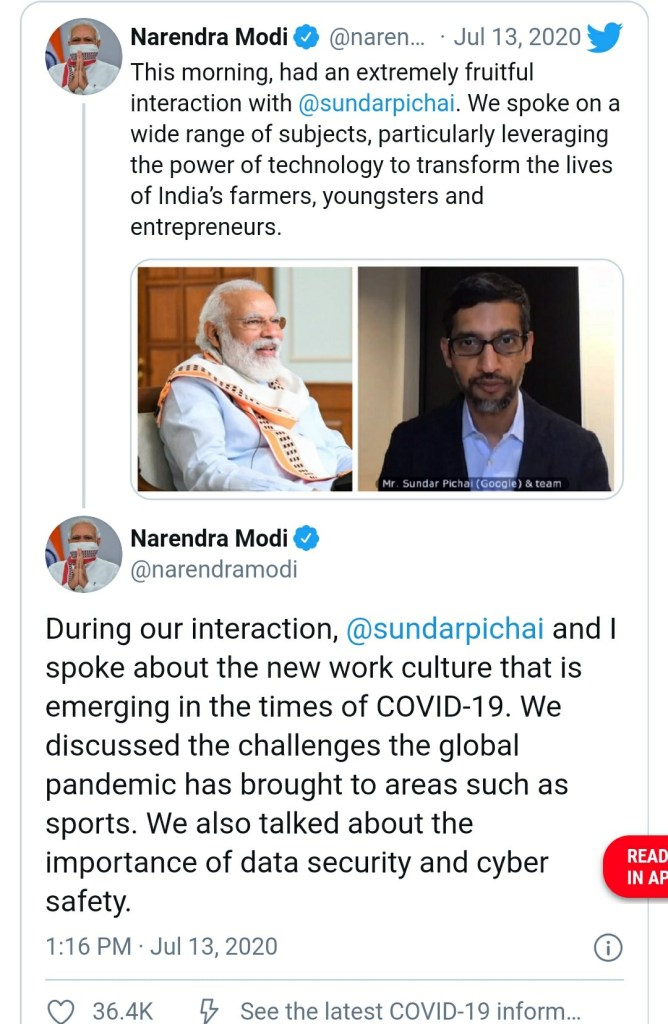
Google’s investment in India: The announcement assumes particular significance given the impending gap in the country’s tech investment ecosystem following the Centre’s clampdown on Chinese technology firms.
NEW DELHI, INDIA JANUARY 4: Google CEO Sundar Pichai speaks during Digital Unlocked Google event at Taj palace on January 4, 2017 in New Delhi, India. (Photo by Pradeep Gaur/Mint via Getty Images)
Tech-giant Google Monday announced plans to invest $10 billion in India over the next 5-7 years by way of equity investments, partnerships and other arrangements to “accelerate digitisation” in the country.
The announcement assumes particular significance given the impending gap in the country’s tech investment ecosystem following the Centre’s clampdown on Chinese technology firms.
Google said its $10-billion fund would focus on areas such as enabling affordable access to the Internet and to information for every Indian in their own language; building new products and services in segments like consumer tech, education, health and agriculture; empowering businesses, especially small and medium ones, to transform digitally; leveraging technology and artificial intelligence for digital literacy, outbreak predictions, and support for rural economies.
These investments will be made through a mix of equity investments, partnerships, operations, infrastructure and ecosystem investments. These include Google’s existing projects such as Internet Saathi for spreading awareness of the Internet in rural villages and an artificial intelligence-based flood forecasting system, among others.















 TechAnlyX